












Why Do Lenses with the Same 1.67 or 1.74 Index Have Different Thicknesses?
lens thickness difference, thin lenses for high myopia, lens thickness
Learn the real reasons behind lens thickness differences and how to avoid bulky, heavy glasses.
Why Do Lenses with the Same 1.67 or 1.74 Index Have Different Thicknesses?
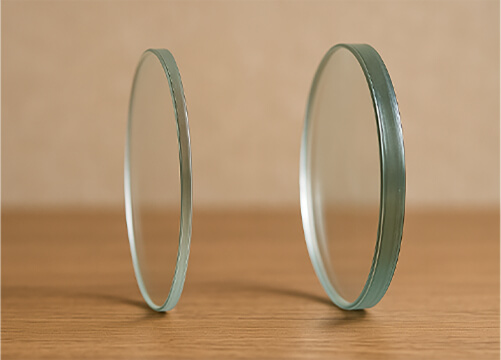
If you have high myopia, you might have experienced this: every time you get a new pair of glasses, the prescription hasn’t changed, the index is the same, yet the lens thickness is different. Sometimes it’s thinner, sometimes it’s thick like the bottom of a beer bottle—heavy and unflattering.
This happens because lens thickness isn’t determined by index alone—it’s influenced by several factors. Here’s how to avoid ending up with overly thick lenses.
1. Frame Size Matters for High Myopia
Myopia lenses are concave lenses, meaning they’re thinner in the center and thicker at the edges. The higher your prescription, the thicker the edges become.
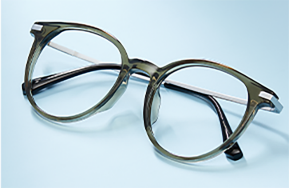
For those with prescriptions above -6.00 diopters (high myopia), large frames are your enemy. Choosing small-frame designs cuts away more of the thick lens edges, leaving mostly the thinner central area—making the final glasses lighter and slimmer.
2. Choose High Index, Aspheric Lenses
Lens thickness is closely related to the refractive index. For high myopia, the recommended indexes are 1.67, 1.71, or 1.74 (thinnest but more expensive). If you’re on a budget, choose the highest index within your range.
Equally important is lens design. Aspheric lenses are thinner and provide more accurate edge-to-edge vision compared to spherical ones. They reduce distortion and look more aesthetically pleasing.
If you’re shopping online, buyglasses.com offers aspheric lenses on all orders—factory-direct prices with guaranteed quality.
3. Pupil Distance (PD) Accuracy
Your PD (pupillary distance) is fixed, but small errors can occur during lens production. Even though national standards may allow up to a 2mm error, high prescriptions require much more precision. Small deviations in PD can change the way the lens is cut, affecting thickness.
Bottom line:
If you want thinner, lighter lenses, don’t just look at the index number—choose smaller frames, opt for high-index aspheric lenses, and ensure accurate PD measurements. This way, you can avoid the dreaded “beer bottle bottom” look and enjoy more comfortable eyewear.

20
This article was written by the buyglasses.com team. Buy glasses at factory prices on buyglasses.com.